golfclubase

Callaway Elyte Driver vs Quantum Mini Driver

Max Distance or Tighter Control?

Callaway Elyte Driver

Callaway

Elyte Driver

2025 model

Release date
Jan 24, 2025
MSRP at launch
$399.99
Elyte Driver details →
Callaway Quantum Mini Driver

Callaway

Quantum Mini Driver

2026 model

Release date
Apr 29, 2026
MSRP at launch
$549.99
Quantum Mini Driver details →

Which to choose

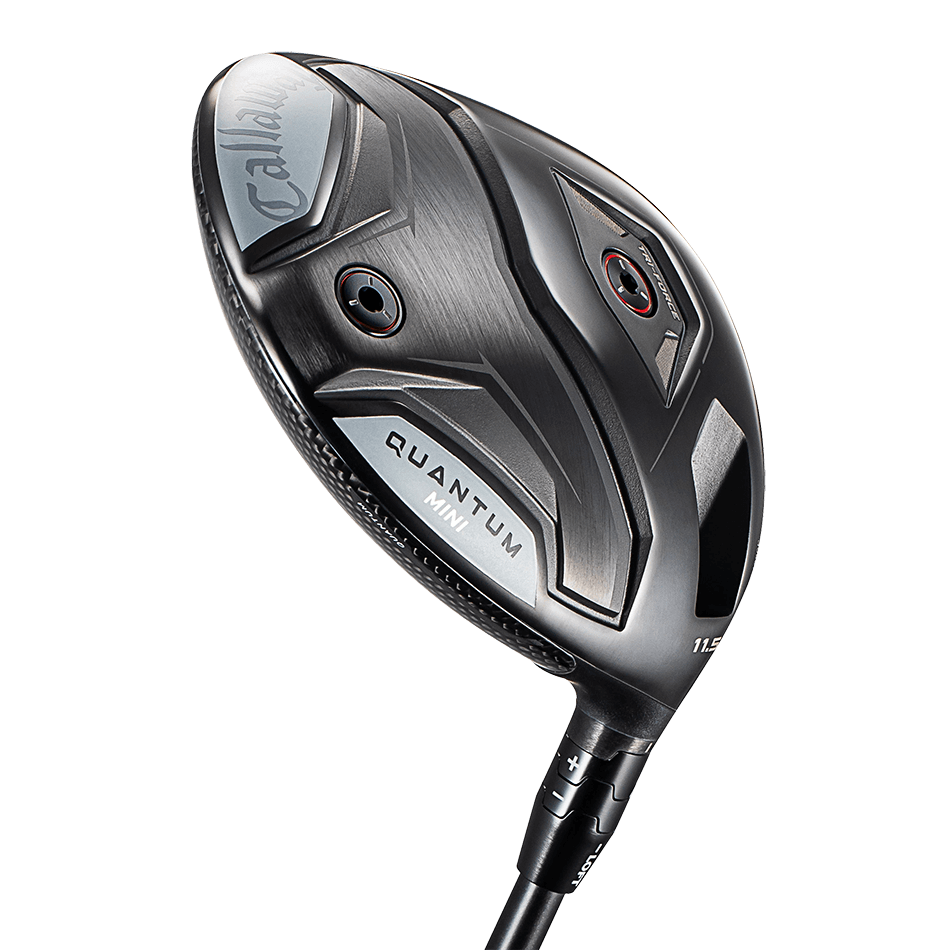
The biggest difference is purpose. The Elyte is Callaway's all-round 2025 driver, with a full 460cc head and a 45.75-inch length. The Quantum Mini Driver is a 340cc, 44-inch club built as a second tee club or driver alternative. It gives up some distance for control, and its carry falls between a driver and a 3-wood.

Testers call both forgiving. On the Elyte, ball speed holds across the face. On the Quantum Mini, off-centre strikes stay on line and dispersion is tight. The Elyte is the one aimed at bringing spin down, and it suits a wide handicap range. The Quantum Mini is aimed at tight holes and at players around 100 mph who care more about control than maximum distance.

Choose the Elyte Driver if…

you want one main driver for maximum distance, especially if you spin the ball too much and want more carry, with weight and hosel settings for neutral, draw or fade.

Choose the Quantum Mini Driver if…

you want a forgiving, high-launching second tee club for tight holes, or a straighter option than your driver, and you'll give up some distance for control.

Common questions

Which goes further?
The Elyte is the full-size distance driver. Testers say the Quantum Mini trades a bit of distance for control, with carry between a driver and a 3-wood.
Which is easier to keep in play?
Testers call both forgiving. The Quantum Mini stands out for off-centre strikes holding their line and for tight dispersion, which makes it the control option.
How do the heads and lengths compare?
The Elyte has a 460cc head at 45.75 inches with 10.5° loft. The Quantum Mini has a 340cc head at 44 inches with 11.5° loft, but it is large and tall enough that it still looks like a small driver at address.

Written by golfclubase with AI from our summaries of published reviews and test videos and the makers' published specs (Oct 25, 2026).

Side by Side, Aspect by Aspect

Launch and Spin: the Elyte Flies Flatter

Reviewers mostly describe the Elyte (10.5°) as a low-spin driver. Several saw spin come down. One credited the carbon crown, and another, who usually spins the ball too much, said it lowered his spin. Views on launch differ. One reviewer saw a more penetrating flight, and another rated it mid rather than the marketed mid-high. One tester who already launched the ball high moved down to the 9° head. Most reviewers say the Quantum Mini launches high and gets airborne easily. Views on its spin are split. Two reviewers found it a little high, while others saw low or mid spin. Its front and rear weights can lower flight and spin. The Elyte flies flatter with less spin, while the Quantum Mini flies higher at its default settings.

Forgiveness: Both Rated Highly

For the Elyte, one reviewer called forgiveness a major strength and said misses didn't feel like true misses. Another tester thought it was at least as forgiving as 10K-style drivers. In one testing video, the Elyte's short-and-long consistency was tighter, but the reviewer didn't see the left-right improvement he had hoped for. For the Quantum Mini, one reviewer called forgiveness a standout strength. Others said off-centre strikes stayed on line and dispersion was tight in both weight positions. One tester called it among the most forgiving mini drivers he has hit. Another said its shorter 44-inch length made the centre of the face easier to find. Both models score well here. Reviewers compare the Elyte with other full-size drivers, while they credit the Quantum Mini's stability partly to its shorter length.

Feel and Sound: Opinions Split on Both

Reviewers disagree about the Elyte's feel. Several called it soft, premium or very solid, while one found it firmer than expected and another called it traditional rather than fast. Most comments on its sound are positive, describing a muted or quiet, focused tone. One reviewer heard a deep boom on centred strikes and a sharper crack on misses, though some readers criticised the sound. Testers found the Quantum Mini solid and easy to square up. One reviewer described a balanced mix of solid and fast feel. Its sound also divides opinion: one reviewer called it louder than average and slightly metallic, and another called it a solid, muted Callaway tone. Neither club gets a single verdict on feel or sound, but the Quantum Mini draws more comments that it sounds loud.

Shot Shape and Adjustability

Reviewers didn't describe any built-in draw or fade bias for the Elyte. Instead, they point to its movable sole weight, which has neutral, draw and fade settings, plus an adjustable hosel. One reviewer felt the neutral setting was stable, and another said the weight helped limit a severe miss to the right. Views on the Quantum Mini's shot shape vary. One reviewer said it turns over easily for a draw but also works for a controlled fade. Another found it mostly straight, with the face sitting slightly open at address. Its OptiFit hosel adjusts loft and lie separately, and its front and rear weights mainly change launch and spin. The Elyte has the more direct shot-shape adjustment, while the Quantum Mini's settings focus on trajectory.

Written by golfclubase with AI from what review articles and test videos said about each model, aspect by aspect (Oct 25, 2026).

Key differences

  • Loft: the Quantum Mini Driver is 1° higher than the Elyte Driver
  • Head volume: the Quantum Mini Driver is 120 cm³ smaller than the Elyte Driver
  • Club length: the Quantum Mini Driver is 1.75″ shorter than the Elyte Driver

Specs side by side

Elyte Driver: 10.5°; Quantum Mini Driver: 11.5° (US models).

Elyte DriverQuantum Mini Driver
Loft10.5°11.5°+1°
Lie angle57°57°
Head volume460 cm³340 cm³−120
Face materialTitanium—
Body materialMulti-materialMulti-material
Club length45.75″44″−1.75″

Values are as published by the makers. Sources are listed on each model's page.

The Numbers, Visualized

Where They Sit Among Drivers

Compared with the reference club of every model in Drivers on golfclubase (US specs; 10.5° / 11.5°). The line is the full range, the band the middle half, the tick the median.

Lie angleElyte Driver 57°/Quantum Mini Driver 57°
54°60°

Both rank #17 lowest of 97.

Head volumeElyte Driver 460 cm³/Quantum Mini Driver 340 cm³
280 cm³460 cm³

Elyte Driver ranks #1 largest of 95. Quantum Mini Driver ranks #6 smallest of 95.

Club lengthElyte Driver 45.75″/Quantum Mini Driver 44″
43.5″46.5″

Elyte Driver ranks #14 longest of 97. Quantum Mini Driver ranks #8 shortest of 97.

What reviewers say

Elyte Driver

What reviewers like

  • Lower, more consistent spin than its Ai Smoke predecessor
  • Forgiving on off-centre strikes, with ball speed holding across the face
  • Clean, confidence-inspiring look with a matte carbon crown
  • Movable sole weight and adjustable hosel for neutral, draw or fade settings
  • Solid, satisfying sound on centred strikes

Watch out for

  • Premium price
  • Large sole graphics may not appeal to everyone
  • Distance gains over older drivers may be modest for some players
Full overview of the Elyte Driver →

Quantum Mini Driver

What reviewers like

  • Very forgiving, with off-centre strikes holding their line
  • Strong ball speed for a mini driver
  • High, easy launch off the tee at the default setting
  • Large, driver-like head looks confidence-inspiring at address
  • Sliding weights and an adjustable hosel let you tune flight

Watch out for

  • Head can feel oversized for golfers who prefer a compact profile
  • Costs noticeably more than a comparable 3-wood
  • Moving weight forward makes it a little less forgiving
Full overview of the Quantum Mini Driver →

Lofts and clubs offered

Elyte Driver
9° / 10.5° / 12°
Quantum Mini Driver
11.5° / 13.5°

More comparisons