golfclubase

TaylorMade Qi35 Driver vs Qi35 Max Driver

Shape Your Shots or Steady Your Miss?

TaylorMade Qi35 Driver

TaylorMade

Qi35 Driver

2025 model

Release date
Jan 30, 2025
MSRP at launch
$599.99
Qi35 Driver details →
TaylorMade Qi35 Max Driver

TaylorMade

Qi35 Max Driver

2025 model

Release date
Jan 30, 2025
MSRP at launch
$599.99
Qi35 Max Driver details →

Which to choose

The biggest difference is shot-shaping versus stability. Testers found the standard Qi35 fairly neutral and easy to shape both ways. The Qi35 Max is the most forgiving head in the 2025 Qi35 family, with its weight set low and to the rear. It's built for golfers who care more about stability than working the ball. The Max is billed as slightly draw-biased and has a more upright 58° lie, against 56° on the Qi35.

Both are 460cc heads with carbon faces and a 45.75-inch length. Both forgive mis-hits well and have a solid feel and a muted sound. Testers' spin reports varied for both heads, so a fitting is strongly advised either way.

Choose the Qi35 Driver if…

you want strong forgiveness but also a fairly neutral flight you can shape both ways, with distance close to the low-spin LS head.

Choose the Qi35 Max Driver if…

you struggle with a big miss and want maximum stability, high launch and a slight draw bias, and you don't mind giving up shot-shaping.

Common questions

Which is more forgiving?
The Qi35 Max is the most forgiving head in the family, and testers said even toe strikes held their line. The standard Qi35 is also very forgiving, with mis-hits keeping their speed and direction well.
Which has more draw bias?
The Qi35 Max is billed as slightly draw-biased and has a more upright 58° lie, though one tester saw a fade with it. Testers found the standard Qi35 fairly neutral at a 56° lie.
Which is better for shaping shots?
The standard Qi35, which testers said is easy to shape both ways. The Max is designed for stability rather than shot-shaping.

Written by golfclubase with AI from our summaries of published reviews and test videos and the makers' published specs (Oct 25, 2026).
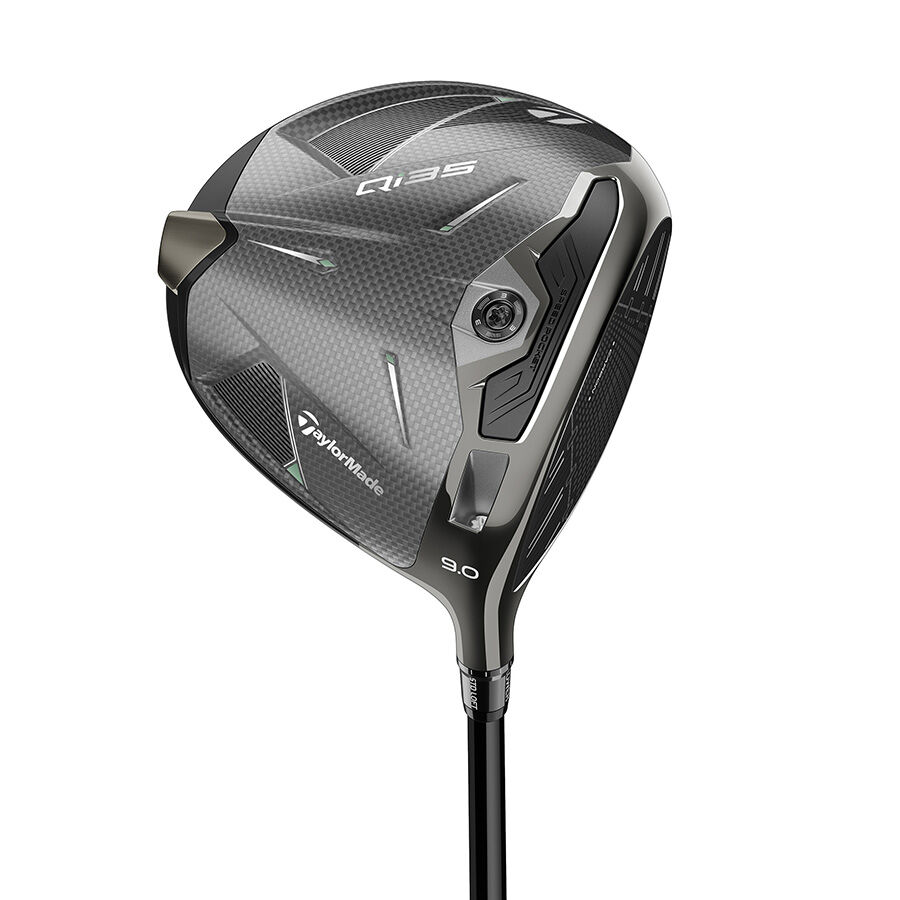
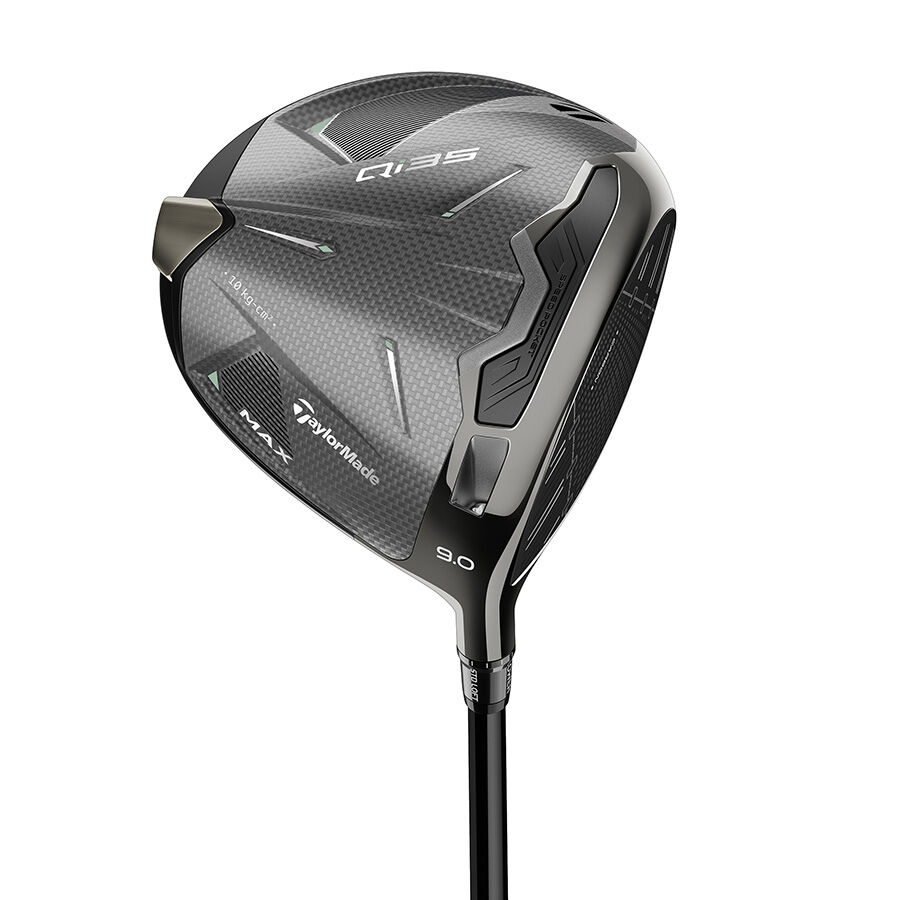
Side by Side, Aspect by Aspect

Forgiveness: the Max Is Built for Maximum Stability

Reviewers rated the standard Qi35 highly on forgiveness. Off-centre hits still flew straight and kept their speed, and dispersion stayed consistent. One reviewer called it one of the most forgiving standard heads available, and in a testing video numbers held up on toe, heel and low-face strikes with only a modest loss. Another video, though, pointed to the Max as the most forgiving option. Reviewers described the Qi35 Max as the largest and highest-MOI head in the Qi35 line, with rear tungsten weighting. Testers saw toe and heel strikes hold their line, and one presenter called it the friendliest driver in the range. Both forgive well, but the Max is the head designed specifically for maximum forgiveness.

Launch and Spin: the Max Is More Reliably High

Reports on the standard Qi35 varied. One reviewer found it easy to get airborne. Another saw launch and spin rise when the weight was moved forward, which he found counterintuitive. In testing videos, one tester saw low spin and a more penetrating flight with the heavier weight forward, while another found both launch and spin on the high side but manageable. For the Qi35 Max, several reviewers described high launch, helped by a low centre of gravity. Spin opinions were split: one reviewer felt it was too high to get the most distance, another called it mid spin, and one tester saw low spin on good strikes. The Max is described more consistently as high-launching, while spin results vary for both heads.

Shot Shape: Neutral Qi35 vs Draw-Intent Max

One reviewer found the standard Qi35 fairly neutral, with less draw bias than the Max and easy to shape both ways, and another saw little bias at all. A third noted a slight right bias, which he put down to a stiffer shaft than his usual one. Its two movable weights allow small changes to spin and flight window rather than a big change in bias. The Qi35 Max is billed as slightly draw-biased and has a 58° lie against the Qi35's 56°. Results were mixed, though: one reviewer saw a modest fade with the stock shaft, and one tester noted a slight cut on a single shot. The Qi35 aims for neutral flight, while the Max's draw intent didn't show up consistently in testing.

Feel and Sound: Solid and Muted on Both

Reviewers described contact on the standard Qi35 as solid, stable and firm. One noted feedback only near the toe or heel. The sound was called muted and pleasant, and one reviewer said it turns into a higher-pitched thwack at full speed. The Qi35 Max got similar comments. Reviewers called it solid and powerful, and one tester ranked it among the best-feeling drivers he had used. Its sound was described as quieter and more muted than many drivers. One tester noted it feels light in the hand, and a presenter said the Max Light version takes 45–50 gram shafts. Both feel and sound alike, and the Max adds a lighter in-hand feel for one tester.

Looks: Clean Qi35, Bigger and More Divisive Max

Reviewers liked the standard Qi35's large, rounded head, which still looks square. They also praised its matte dark grey or satin-grey carbon crown and clean alignment aids. On the downside, one reviewer disliked the bright silver headcover, and in a testing video the high-polish section near the hosel was said to draw the eye. The Qi35 Max looks very similar but slightly bigger, and reviewers described a large, long, confidence-building shape. Its grey finish was called premium, but one tester found the gray top polarizing, and one reviewer preferred how the standard Qi35 looks at address. Both look large and confidence-inspiring, and the Max is the bigger head, with a finish that divided opinion more.

Written by golfclubase with AI from what review articles and test videos said about each model, aspect by aspect (Oct 25, 2026).

Key differences

  • Lie angle: the Qi35 Max Driver is 2° higher than the Qi35 Driver
  • Swing weight: the Qi35 Max Driver is 2 pt heavier than the Qi35 Driver

Specs side by side

Qi35 Driver: 10.5°; Qi35 Max Driver: 10.5° (US models).

Qi35 DriverQi35 Max Driver
Loft10.5°10.5°
Lie angle56°58°+2°
Head volume460 cm³460 cm³
Face materialCarbonCarbon
Body materialMulti-materialMulti-material
Club length45.75″45.75″
Swing weightD3D5+2 pt

Values are as published by the makers. Sources are listed on each model's page.

The Numbers, Visualized

Where They Sit Among Drivers

Compared with the reference club of every model in Drivers on golfclubase (US specs; 10.5° / 10.5°). The line is the full range, the band the middle half, the tick the median.

Lie angleQi35 Driver 56°/Qi35 Max Driver 58°
54°60°

Qi35 Driver ranks #5 lowest of 97. Qi35 Max Driver ranks #32 lowest of 97.

Head volumeQi35 Driver 460 cm³/Qi35 Max Driver 460 cm³
280 cm³460 cm³

Both rank #1 largest of 95.

Club lengthQi35 Driver 45.75″/Qi35 Max Driver 45.75″
43.5″46.5″

Both rank #14 longest of 97.

Swing weightQi35 Driver D3/Qi35 Max Driver D5
B9D5

Qi35 Driver ranks #26 lightest of 68. Qi35 Max Driver ranks #1 heaviest of 68.

What reviewers say

Qi35 Driver

What reviewers like

  • High MOI forgiveness keeps mis-hits straight with little speed loss
  • Large, confidence-inspiring head that still sits square at address
  • Solid, stable feel with a pleasing, muted sound
  • Fairly neutral flight that is easy to shape both ways
  • Easy to launch, with distance close to the low-spin head

Watch out for

  • Polished section near the hosel clashes with the matte crown
  • Premium price
Full overview of the Qi35 Driver →

Qi35 Max Driver

What reviewers like

  • Very forgiving, with off-centre strikes holding their line
  • Solid, stable feel at impact
  • Muted, pleasant sound for a carbon-crowned driver
  • Large, confidence-inspiring head shape at address
  • High launch helps get the ball airborne

Watch out for

  • Grey carbon crown finish won't suit every eye
  • Priced higher than the previous model
Full overview of the Qi35 Max Driver →

Lofts and clubs offered

Qi35 Driver
9° / 10.5° / 12°
Qi35 Max Driver
9° / 10.5° / 12°

More comparisons