golfclubase

TaylorMade Qi4D Driver vs Titleist GTS2 Driver

Shape Your Flight or Add Stability?

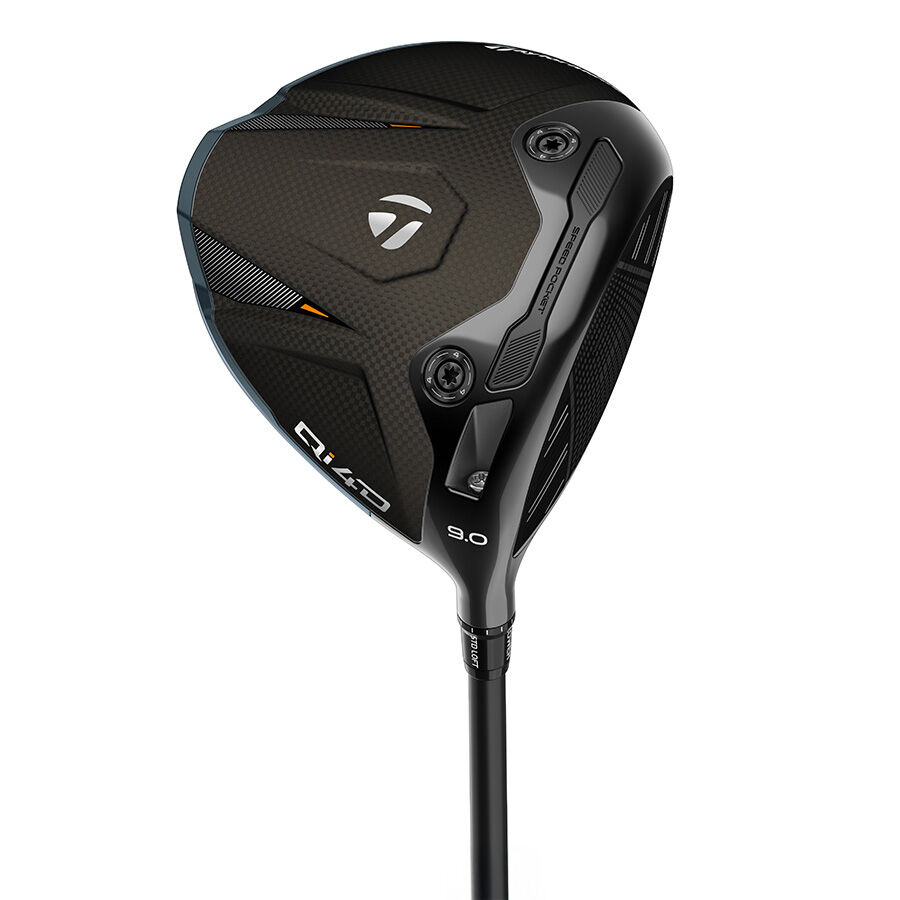
TaylorMade Qi4D Driver

TaylorMade

Qi4D Driver

2026 model

Release date
Jan 29, 2026
MSRP at launch
$649.99
Qi4D Driver details →
Titleist GTS2 Driver

Titleist

GTS2 Driver

2026 model

Release date
Jun 11, 2026
MSRP at launch
$699.00
GTS2 Driver details →

Which to choose

The biggest difference is what each driver is built around. The TaylorMade Qi4D is the all-round, adjustable core model. Its four movable weights let you shift the centre of gravity toward a draw, a fade or a more penetrating flight, and testers found its spin consistently mid-to-low. The Titleist GTS2 is the stability model in its line. It has the largest footprint in the GTS family plus front and rear weight ports, and testers disagreed about its launch and spin.

Testers say both hold ball speed well on heel and toe strikes. The GTS2 has a classic glossy black look and is aimed mainly at mid-to-high handicappers, while the Qi4D suits a wider range of players. Specs: Qi4D 45.75 inches, 56° lie; GTS2 45.5 inches, 58.5° lie.

Choose the Qi4D Driver if…

you want to shape your ball flight toward a draw, a fade or a more penetrating trajectory with four movable weights, and you want spin kept in a well-controlled mid-to-low window.

Choose the GTS2 Driver if…

you're a mid-to-high handicapper or a less consistent ball-striker who wants the most stability and a large, classic glossy black head at address, and you don't mind paying a premium price.

Common questions

Which is more forgiving?
Testers found that both hold ball speed well on heel and toe mishits. The GTS2 is the model built specifically for stability, with the largest footprint in its family.
Which has more predictable spin?
The Qi4D. Testers consistently describe its spin as mid-to-low and well controlled, while GTS2 results ranged from too little spin at slower speeds to too much with the weight set back.

Written by golfclubase with AI from our summaries of published reviews and test videos and the makers' published specs (Oct 25, 2026).
Side by Side, Aspect by Aspect

Launch and Spin: Qi4D Steadier, GTS2 Split

One reviewer described the Qi4D's launch as mid-high and its spin as mid-low. Another found launch slightly higher and spin slightly lower than the Qi35, and a third felt spin sat in an ideal middle ground between the Max and LS heads. One testing video noted a couple of shots that spun slightly low. Opinions on the GTS2 were split. One reviewer found it launched highest of three GTS models. One tester saw higher spin with the weight set back, and another found spin slightly high at the 10° head. A third tester found spin low at slower swing speeds and suggested a higher-lofted head. Overall, the Qi4D got more consistent verdicts, while GTS2 results depended on the setup and the swing.

Forgiveness: Both Strong, GTS2 More Divided

Testers repeatedly praised the Qi4D for tight, consistent dispersion. Heel strikes and low or toe strikes kept good carry, and one reviewer called it very forgiving for a core model. Another review, though, said forgiveness was not its main focus and pointed to the Qi4D Max for players who want more. Most GTS2 testers praised its forgiveness: one comparison found it had the tightest dispersion of three models, one reviewer said it rivals max-forgiveness drivers, and one tester said it was more forgiving than his own Ping. One tester disagreed, finding that off-centre misses went further left and right than with the GTS4. Both rate well, but the GTS2 drew the highest praise and also the only clear complaint.

Feel and Sound: Carbon Pop vs Traditional

Reviewers described the Qi4D as firm, fast, solid and powerful, and one noted a pop on centred strikes. One reviewer felt it differs little from a titanium face apart from the sound. One reviewer called the sound crisp and powerful, another found it fuller than some rivals' tinny tone, and a third called it the best-sounding TaylorMade driver in a while. The GTS2 felt solid and stable to testers, though one found it less solid with the weight back, and another said heel and toe mishits felt 'toey'. Two testers disagreed on how much feedback it gives. Its sound was called more traditional, deeper and less muted than carbon-faced rivals. The Qi4D has a carbon-face character, while the GTS2 sounds more metallic and traditional.

Looks at Address: Matte Carbon vs Gloss Black

Testers liked the Qi4D's muted, dark colourway, but opinions on its shape varied. Two reviewers called it compact and clean, one saw a round, slightly toe-centric head, and one tester found it noticeably larger front to back. One reviewer liked the white crown alignment line, while another was put off by glare from the carbon face and the visible face grooves. Testers called the GTS2 sleek and typically Titleist, and said its larger head and lofted look give confidence. One reviewer found it less appealing than the GT. A different tester felt the plain styling may bore some buyers and noted sunlight glare off the glossy crown. The Qi4D goes for a muted carbon finish, and the GTS2 sticks with Titleist's familiar gloss.

Written by golfclubase with AI from what review articles and test videos said about each model, aspect by aspect (Oct 25, 2026).

Key differences

  • Loft: the GTS2 Driver is 0.5° lower than the Qi4D Driver
  • Lie angle: the GTS2 Driver is 2.5° higher than the Qi4D Driver
  • Club length: the GTS2 Driver is 0.25″ shorter than the Qi4D Driver

Specs side by side

Qi4D Driver: 10.5°; GTS2 Driver: 10° (US models).

Qi4D DriverGTS2 Driver
Loft10.5°10°−0.5°
Lie angle56°58.5°+2.5°
Head volume460 cm³—
Face materialCarbon—
Body materialMulti-material—
Club length45.75″45.5″−0.25″
Swing weightD4—

Values are as published by the makers. Sources are listed on each model's page.

The Numbers, Visualized

Where They Sit Among Drivers

Compared with the reference club of every model in Drivers on golfclubase (US specs; 10.5° / 10°). The line is the full range, the band the middle half, the tick the median.

Lie angleQi4D Driver 56°/GTS2 Driver 58.5°
54°60°

Qi4D Driver ranks #5 lowest of 97. GTS2 Driver ranks #33 highest of 97.

Head volumeQi4D Driver 460 cm³
280 cm³460 cm³

Qi4D Driver ranks #1 largest of 95.

Club lengthQi4D Driver 45.75″/GTS2 Driver 45.5″
43.5″46.5″

Qi4D Driver ranks #14 longest of 97. GTS2 Driver ranks #19 shortest of 97.

Swing weightQi4D Driver D4
B9D5

Qi4D Driver ranks #5 heaviest of 68.

What reviewers say

Qi4D Driver

What reviewers like

  • Fast ball speed with strong carry, including on mis-hits
  • Well-controlled mid-to-low spin across the face
  • Tight dispersion and good forgiveness for a core head
  • Four movable weights allow genuine draw, fade or flight tuning
  • Solid, powerful feel with a crisp, full sound

Watch out for

  • Weight settings can give unexpected results without a fitting
  • Shaft release-profile options may confuse buyers
  • Carbon face glare and visible grooves can distract at address
Full overview of the Qi4D Driver →

GTS2 Driver

What reviewers like

  • Holds ball speed and distance well on toe and heel mishits
  • Consistent, repeatable shot pattern for most players
  • Solid, stable feel on centre strikes
  • Classic glossy black look that inspires confidence at address
  • Fast ball speeds and strong distance when properly set up

Watch out for

  • Very expensive, even by premium driver standards
  • Glossy finish can mark easily and throw glare in sunlight
  • Results depend heavily on getting loft and weights fitted
Full overview of the GTS2 Driver →

Lofts and clubs offered

Qi4D Driver
8° / 9° / 10.5° / 12°
GTS2 Driver
8° / 9° / 10° / 11°

More comparisons