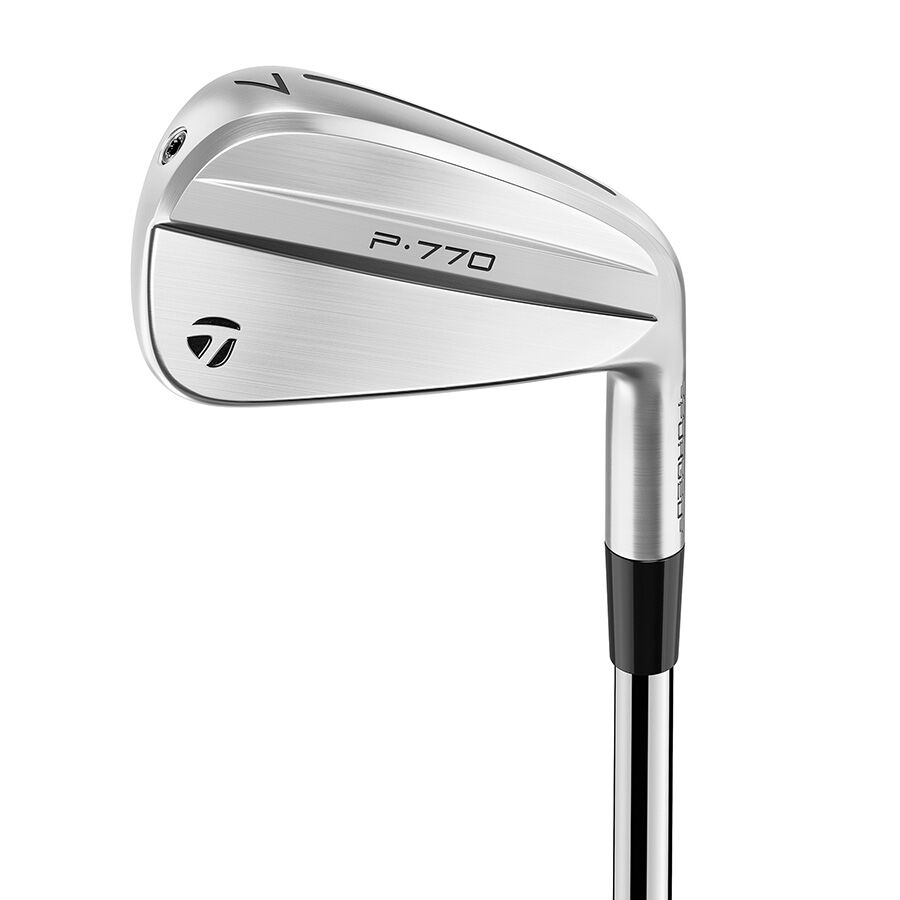
The biggest difference is forgiveness. The hollow-body P·770 is described as more forgiving than you'd expect from a players' iron, with off-centre strikes still carrying well and finishing in a tight group. Opinions on the forged, hidden-cavity ZXi7 are split: some testers found mishits held up, while others lost noticeable distance and accuracy on heel and toe strikes.
At address the P·770 has a slim topline and a short blade length. The ZXi7's topline is square and slightly thick, most of all in the long irons. Both feel soft and solid from the middle, and testers called both easy to shape. The ZXi7 has 32° of loft and is 37.25 inches long in the 7-iron. The P·770 has 33° and is 37 inches long.
Choose the SRIXON ZXi7 Irons if…
you're a consistent ball-striker (up to about a 12 handicap) who puts forged feel, sound and spin that stays consistent through the set ahead of help on mishits.
Choose the P·770 Irons if…
you want a sleek, near-blade look with extra help on off-centre strikes, for example if you're stepping up from game-improvement irons or swing around 80-90 mph.
Common questions
- Which is more forgiving?
- The P·770. Testers say its off-centre strikes still carry well and group tightly, while reports on how the ZXi7 handles heel and toe strikes are mixed.
- Which looks cleaner at address?
- The P·770, which has a slim topline and minimal offset. The ZXi7's topline is square and slightly thick, especially in the long irons.
- Which is longer?
- Neither model is clearly longer. Distance isn't a selling point for the ZXi7, and testers disagree about the P·770's distance.
Written by golfclubase with AI from our summaries of published reviews and test videos and the makers' published specs (Oct 25, 2026).