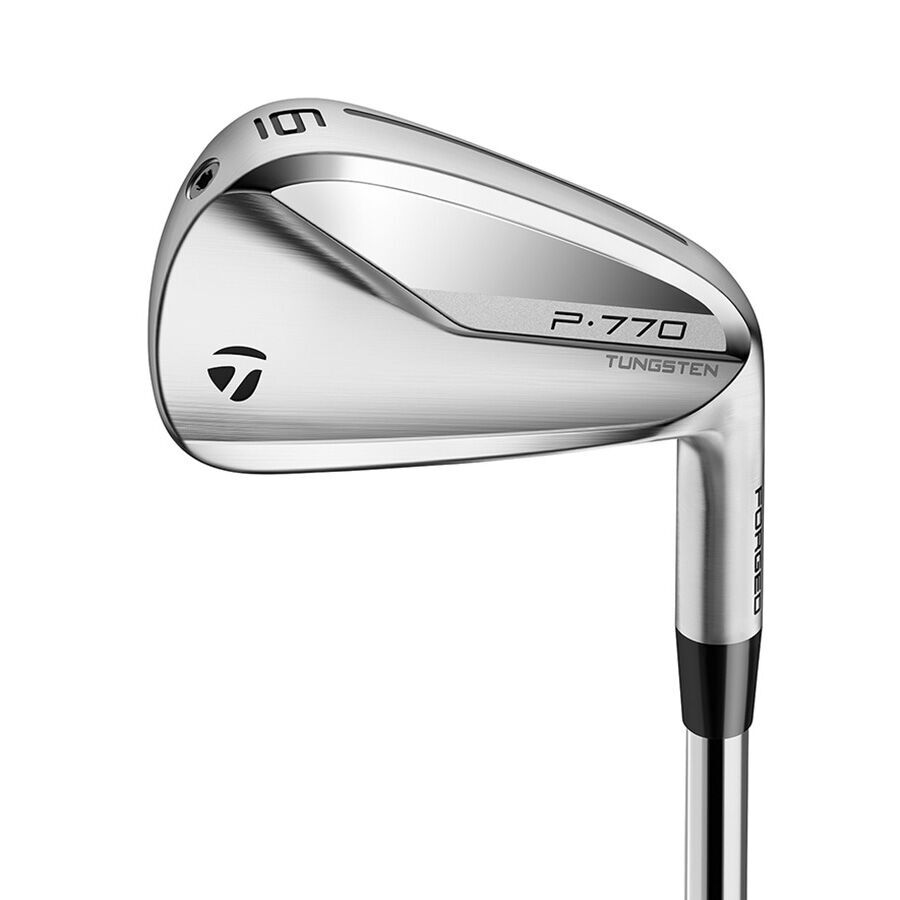
The biggest difference is how much help each gives. Testers call the hollow-body P·770 forgiving and say distance holds up well on off-centre strikes, especially in the long irons. Opinions on the ZXi7's forgiveness are split: some found mishits still carried well, while others lost noticeable distance and accuracy on heel and toe strikes. Testers also say distance is not the ZXi7's selling point.
Feel goes the other way. The ZXi7 gets the most praise for a soft, solid, responsive strike and a good sound. The P·770 feels solid and stable but less soft, and it gives less feedback. The P·770 earns praise for its clean, blade-like look, while the ZXi7's squarish, slightly thick topline draws complaints. The 7-irons are 33° (P·770) and 32° (ZXi7).
Choose the P·770 Irons if…
you want a compact, traditional-looking iron that adds launch, distance and forgiveness in the long irons, and you don't mind a firmer feel with less feedback on strike.
Choose the SRIXON ZXi7 Irons if…
you strike the ball consistently (roughly a 12 handicap or better) and care most about a soft, responsive feel, consistent spin and shaping shots, more than extra distance.
Common questions
- Which is more forgiving?
- The P·770. Testers agree its distance holds up well on mishits, while reviews of the ZXi7 are split and some say heel and toe strikes cost noticeable distance and accuracy.
- Which feels softer?
- The ZXi7. Its centre strikes are described as soft, solid and responsive, while the P·770 feels solid and stable but not as soft, and it gives less feedback.
- Which looks cleaner at address?
- Testers widely praised the P·770's clean, blade-like profile. The ZXi7's main criticism is a square, slightly thick topline, especially in the long irons.
Written by golfclubase with AI from our summaries of published reviews and test videos and the makers' published specs (Oct 25, 2026).