golfclubase

PING Blueprint S Irons vs Blueprint T Irons

Mishit Help or Blade-Level Spin Control?

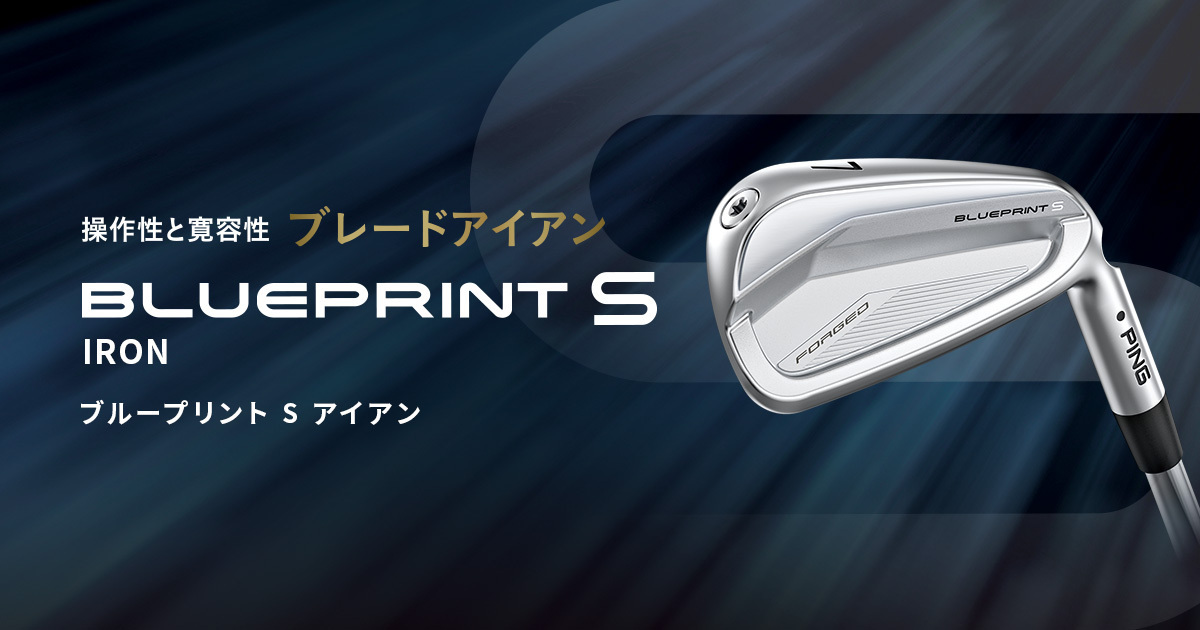
PING Blueprint S Irons

PING

Blueprint S Irons

2024 model

Release date
Jan 25, 2024
MSRP at launch
—
Blueprint S Irons details →
PING Blueprint T Irons

PING

Blueprint T Irons

2024 model

Release date
Jan 25, 2024
MSRP at launch
—
Blueprint T Irons details →

Which to choose

The biggest difference is forgiveness. The Blueprint S is a forged cavity-back that reviewers say helps more on off-centre strikes than its compact shape suggests. The Blueprint T is a forged muscle-back blade with limited forgiveness, and mishits lose noticeable distance. Reviewers credit both with soft, solid feel and easy shaping both ways. The T also gets praise for very consistent spin and a thin sole that moves cleanly through tight lies.

The specs are close: both 7-irons have 33° of loft and a 62° lie. The S has slightly more offset (0.08 vs 0.06 inches), 8° of bounce against the T's 9°, and a slightly longer 7-iron (37.0 vs 36.75 inches). Testers disagreed on launch for both, and long irons on both may launch low.

Choose the Blueprint S Irons if…

you're a low-to-mid handicapper who wants a forged, workable iron with a compact look but a bit more help on mis-hits than a blade gives.

Choose the Blueprint T Irons if…

you're a low-handicap or expert ball striker who wants a true blade with very consistent spin, clear feedback and a thin sole for tight lies, and you can live with limited forgiveness.

Common questions

Which is more forgiving?
The Blueprint S. Reviewers say it offers more help on off-centre strikes than its size suggests. The Blueprint T has limited forgiveness, and mishits lose noticeable distance.
Which has more draw bias?
Neither is described as draw-biased. Reviewers say both shape the ball easily both ways, and the T is specifically noted as having no built-in bias.
Can I combine the two in one set?
Yes. The Blueprint T overview suggests players who need more help can pair it with the Blueprint S or with hybrids at the long end of the set.

Written by golfclubase with AI from our summaries of published reviews and test videos and the makers' published specs (Oct 25, 2026).
Side by Side, Aspect by Aspect

Forgiveness: The S Gives More Help

Most reviewers found the Blueprint S more forgiving than its compact shape suggests. One called it surprisingly forgiving, with steady distance on off-centre strikes. Another said mis-hits still felt solid. A third measured it as more consistent than the T on mis-hits, though not by much. Not everyone agreed: one reviewer said mis-hits are punished, and another wanted a little more help. For the Blueprint T, reviewers mostly rated forgiveness as low, with a small sweet spot and lost distance off-centre. Still, one testing video called it good for a blade, and two sources said low strikes held up well. The S offers a modest but real step up in help over the T.

Feel and Sound: Both Soft, T Sound Split

Reviewers rated the Blueprint S as soft at the centre. Descriptions ranged from forged-like to a soft, heavy thud, and testers said it gives clear feedback on where the ball was struck. One reviewer said mis-hits feel harsher, and one testing video noted a more audible click on heel and toe misses. The Blueprint T also drew praise for feel. One reviewer called it solid and full of feedback, and another said it is not harsh like many blades. Opinions on its sound were split: one reviewer heard a quiet, low-pitched thud, while one testing video described a firm, clacky sound. That video also said the T's mild feel can make the strike harder to sense. Both feel soft, but reviewers were less consistent about the T's sound and feedback.

Looks at Address: The T Is Sharper

Reviewers mostly liked how the Blueprint S looks: compact, with a thin topline and minimal offset. One testing video called it the best-looking iron PING has made, and another said it doesn't look intimidating, although one reviewer did call it intimidating. Two reviewers mentioned the chrome strip near the sole; one said it may not suit everyone, and the other said it grew on him. Reviewers called the Blueprint T clean and compact, with almost no offset. Two sources said its small head could look intimidating. One host saw a Japanese-style look in its squarer toe, and one reviewer found it sleeker than the S. Both look compact, but the T has a sharper, more blade-like profile.

Launch and Spin: Stopping Power for Both

For the Blueprint S, reviewers described the launch as medium in one test and high and consistent in another. That second test also found the long irons fly lower. Several reviewers praised its stopping power on approach shots, though one called its spin average for this style of iron. For the Blueprint T, launch was rated ideal, high or moderate by different sources. Others found the long irons hard to get airborne or the peak height slightly low. Its spin was rated mid to high. One testing video said its spin grouping was one of the tightest it had seen from a blade, while one reviewer felt the 9-iron might spin back. Both stop the ball well, and the T stands out for how consistent its spin is.

Written by golfclubase with AI from what review articles and test videos said about each model, aspect by aspect (Oct 25, 2026).

Key differences

  • Offset: the Blueprint T Irons is 0.5 mm smaller than the Blueprint S Irons
  • Club length: the Blueprint T Irons is 0.25″ shorter than the Blueprint S Irons

Specs side by side

Blueprint S Irons: 7I; Blueprint T Irons: 7I (US models).

Blueprint S IronsBlueprint T Irons
Loft33°33°
Lie angle62°62°
Offset2 mm1.5 mm−0.5 mm
ConstructionForgedForged
Iron type—Muscle back
Club length37″36.75″−0.25″
Swing weightD2D2

Values are as published by the makers. Sources are listed on each model's page.

The Numbers, Visualized

Where They Sit Among Irons

Compared with the reference club of every model in Irons on golfclubase (US specs; 7I / 7I). The line is the full range, the band the middle half, the tick the median.

LoftBlueprint S Irons 33°/Blueprint T Irons 33°
27°35°

Both rank #13 highest of 107.

Lie angleBlueprint S Irons 62°/Blueprint T Irons 62°
61.5°63.5°

Both rank #2 lowest of 107.

OffsetBlueprint S Irons 2 mm/Blueprint T Irons 1.5 mm
1.5 mm6.9 mm

Blueprint S Irons ranks #6 smallest of 70. Blueprint T Irons ranks #2 smallest of 70.

Club lengthBlueprint S Irons 37″/Blueprint T Irons 36.75″
36.25″37.5″

Blueprint S Irons ranks #9 shortest of 106. Blueprint T Irons ranks #8 shortest of 106.

Swing weightBlueprint S Irons D2/Blueprint T Irons D2
B8D3

Both rank #9 heaviest of 68.

Loft by ClubBlueprint S IronsBlueprint T Irons
19°32°45°3I4I5I6I7I8I9IPW
Length by ClubBlueprint S IronsBlueprint T Irons
35.50″37.25″39.00″3I4I5I6I7I8I9IPW

What reviewers say

Blueprint S Irons

What reviewers like

  • Compact, clean look at address with minimal offset and a thin topline
  • Soft, solid feel from the centre with clear strike feedback
  • Easy to shape the ball both ways and control trajectory
  • Reliable stopping power on approach shots
  • More forgiving on mis-hits than its size suggests

Watch out for

  • Heel and toe strikes feel and sound noticeably harsher
  • Chrome strip near the sole won't suit every eye
  • Long irons may launch lower; consider hybrids during fitting
  • Premium price per club
Full overview of the Blueprint S Irons →

Blueprint T Irons

What reviewers like

  • Easy to shape shots both ways with no inherent bias
  • Soft yet solid feel with clear strike feedback
  • Very consistent spin from shot to shot
  • Thin sole works well from tight or poor lies

Watch out for

  • Limited forgiveness; mishits lose noticeable distance
  • Sharp leading edge may dig for steep swingers
Full overview of the Blueprint T Irons →

Lofts and clubs offered

Blueprint S Irons
3I / 4I / 5I / 6I / 7I / 8I / 9I / PW
Blueprint T Irons
3I / 4I / 5I / 6I / 7I / 8I / 9I / PW

More comparisons